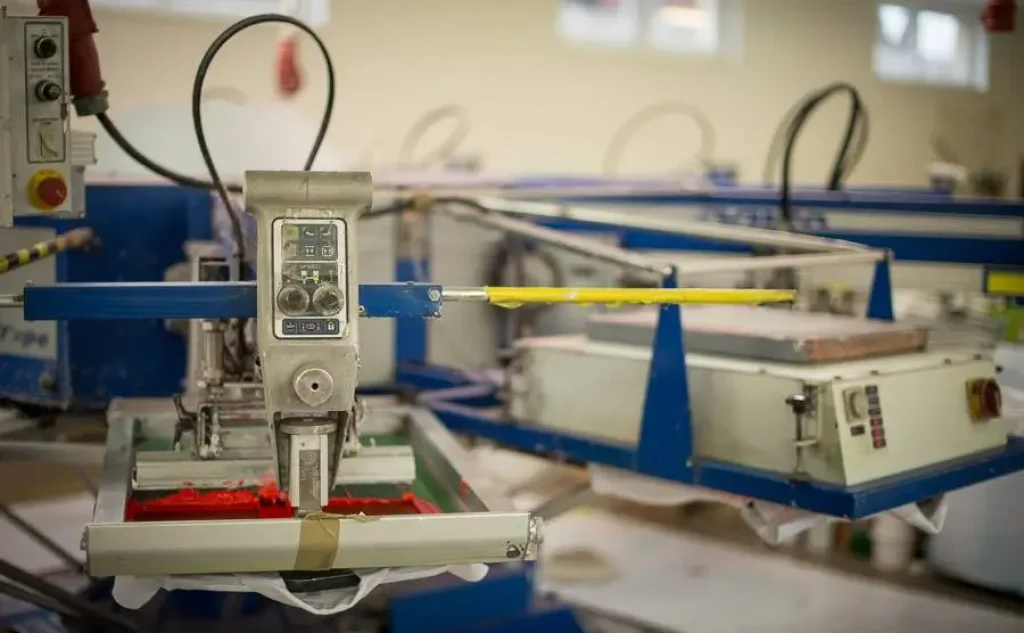
If you’ve ever ordered custom T-shirts, tote bags or promotional items, there’s a good chance they were made using screen printing. And that’s no coincidence. Screen printing is one of the most reliable and long-lasting printing technologies – and even today, it remains a modern, highly relevant solution.
What makes screen printing so popular?
One of the biggest advantages of screen printing is its durability. Thanks to the thicker ink layer, prints remain vibrant, don’t fade easily, and withstand repeated washing.
This makes it an excellent choice if you’re creating:
It’s not just for T-shirts
Many people associate screen printing exclusively with textiles, but its applications go far beyond that.
It can be used on:
That’s why it’s a favorite for brands looking to maintain a consistent visual identity across different products.
How does screen printing work?
In simple terms, ink is pushed through a fine mesh screen onto the material.
The design is created using a light-sensitive coating, and each color is applied separately.
The result is a print that is:
A great option for both small and large quantities
Another major benefit of screen printing is its predictability.
Once the screen is prepared, production can start quickly, making it suitable for:
It’s a technology that scales well without compromising on quality.
Direct vs. transfer screen printing – what’s the difference?
At blog level, it’s enough to know this:
-
Direct screen printing applies the ink directly onto the material, resulting in extremely durable prints, ideal for flat surfaces.
-
Transfer screen printing prints the design onto a carrier first, then applies it using heat – perfect for curved or more complex surfaces.
Both methods have their place, depending on the product and the desired result.
Final thoughts
Screen printing has stood the test of time for a reason.
If you’re looking for a reliable, high-quality and visually striking way to create custom products, it remains one of the strongest options available today.